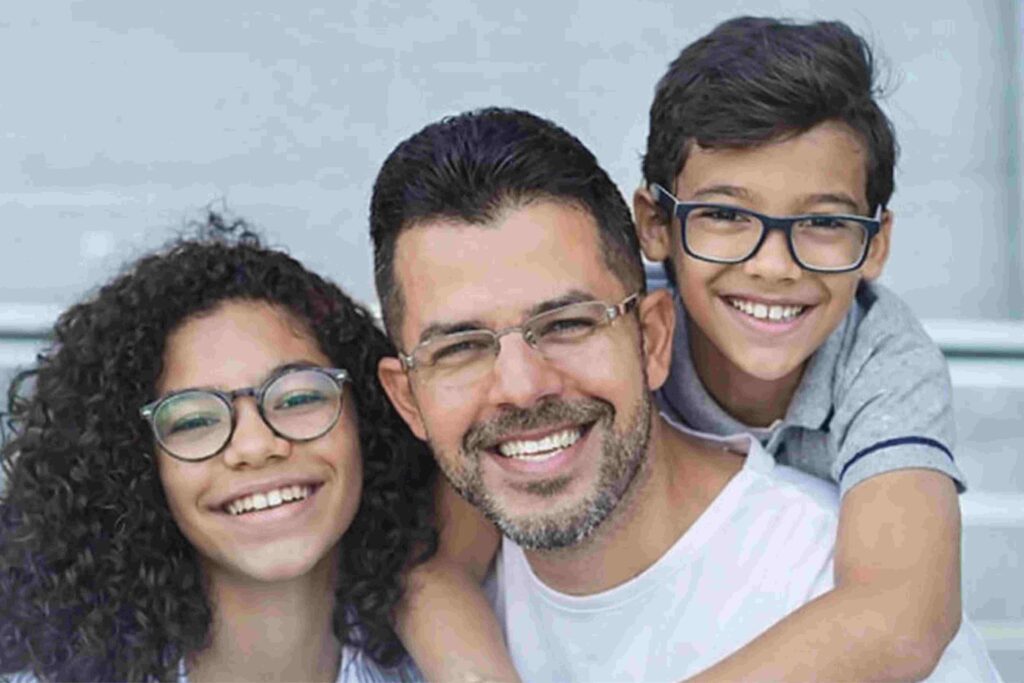
Children may need glasses if there is a refractive error (such as myopia, hyperopia, or astigmatism) or if the eyes are not focusing properly. Glasses help ensure clear vision and support normal visual development.
How do glasses help my child see clearly?
Glasses focus light correctly onto the retina, allowing the child to see clearly. This improves vision and helps the eyes work together effectively.
What is astigmatism?
Astigmatism is a common condition in which the cornea is not perfectly curved, causing blurred or distorted vision. It can be easily corrected with glasses.
Will my child’s number reduce if glasses are worn regularly?
Wearing glasses does not increase or decrease the number. Glasses provide clear vision and help prevent strain, but changes in power depend on the natural growth of the eye.
Is it necessary for my child to wear glasses even if there are no complaints?
Yes, in many cases. Children may not realize their vision is blurred. Wearing prescribed glasses is important for proper visual development and to prevent conditions such as lazy eye (amblyopia).
What should I do if my child refuses to wear glasses?
Encouragement and positive reinforcement are important. Ensure the glasses are comfortable and well-fitted. Gradual adaptation and consistent use usually help children adjust over time.
Can my child eventually stop wearing glasses?
This depends on the type of refractive error and how the eyes develop over time. Some children may see changes as they grow, but many will continue to need glasses for clear vision.