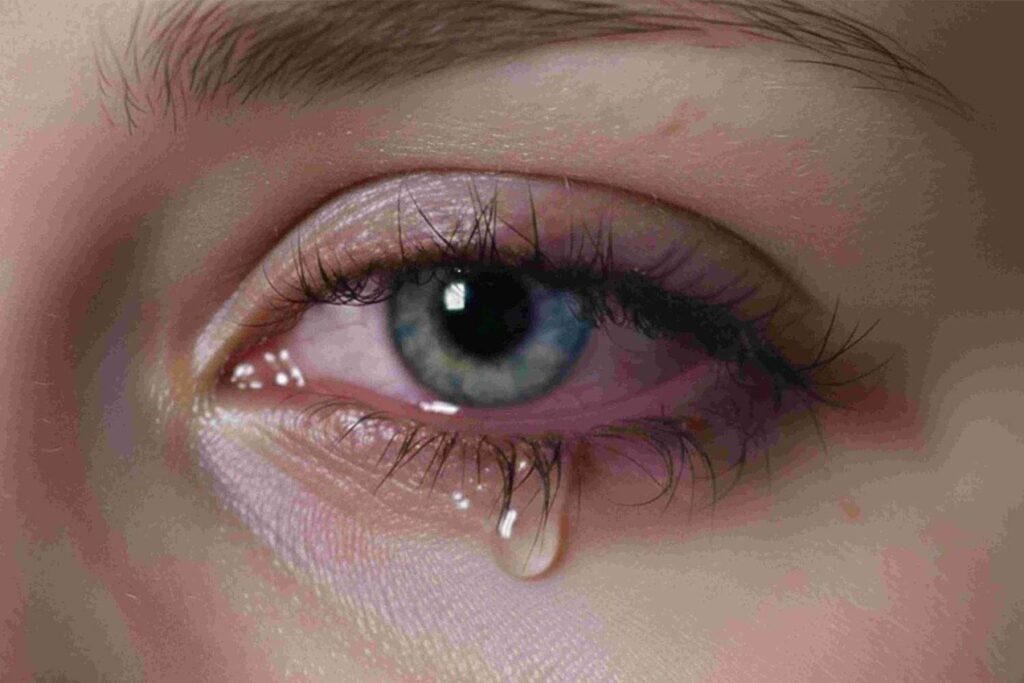
It can occur either due to:
Tears help keep the eyes moist, clean, and comfortable. They are produced by the lacrimal gland, located in the upper outer part of the eyelid. When you blink, tears spread evenly over the surface of the eye. They then drain through tiny openings in the inner corners of the eyelids into small channels called canaliculi. From there, the tears pass into the lacrimal sac and then flow down the nasolacrimal duct into the nose.
A watering eye can be caused either by excessive tear production or by poor tear drainage. Common causes include dry eye (which leads to reflex tearing), irritation or infection of the eye, allergies, eyelid problems, or blockage of the tear drainage system.
Treatment of a watering eye depends on the underlying cause. In some cases, simple measures such as maintaining eyelid hygiene and using lubricating or antibiotic eye drops may be sufficient.
If the watering is due to dry eye or irritation, appropriate eye drops can help reduce symptoms. If there is a blockage in the tear drainage system, procedures may be required to open the passage. In cases related to eyelid problems or infections, specific treatment is directed at the underlying condition.